
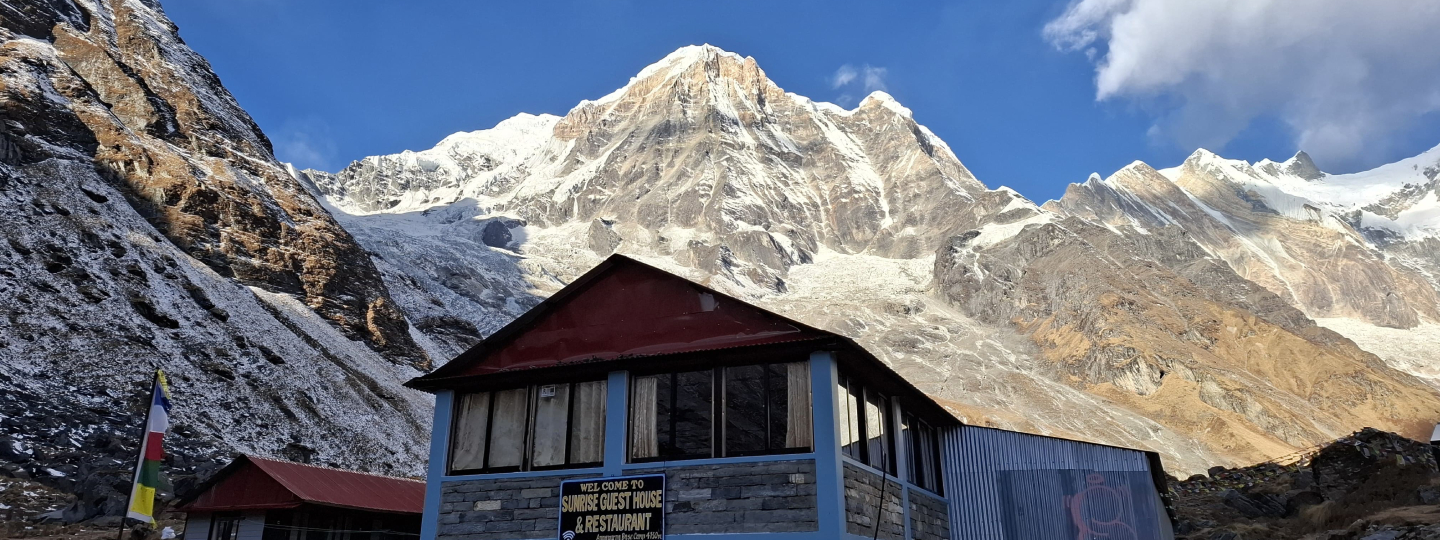
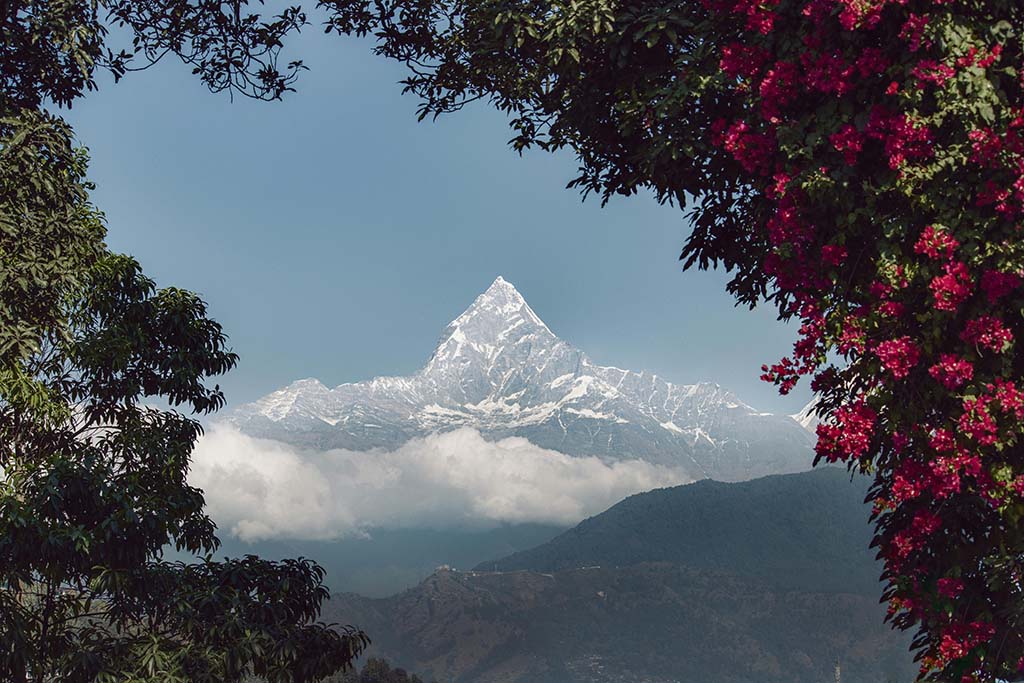
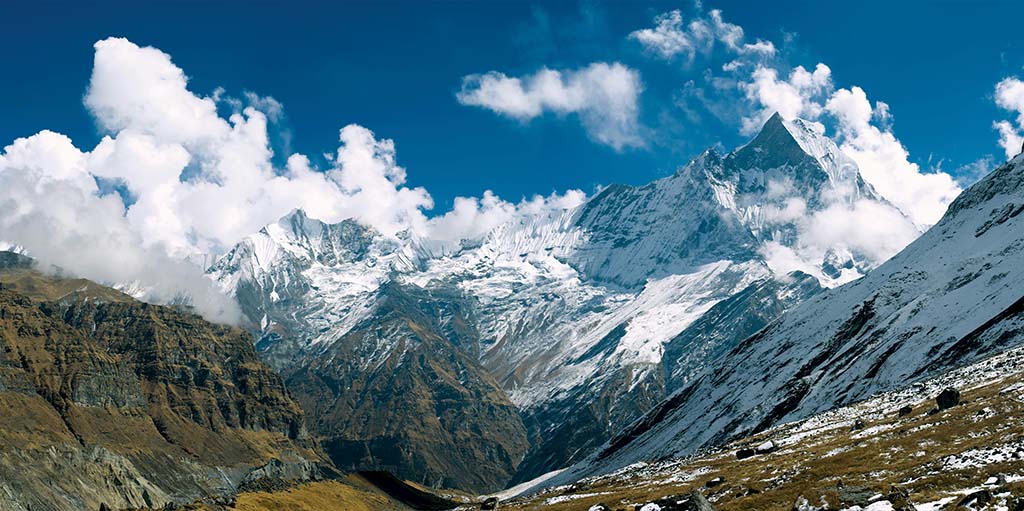
The Annapurna Base Camp trek throws you into raw Nepali landscapes, where vast peaks, local settlements, and wild greenery mix here unlike anywhere else. Reaching near Annapurna I‘s foot, among the Himalaya’s standout summits, hikers pass through routes flanked by Machhapuchhare, that sharp “Fishtail” peak whose outline stays visible throughout the trail.
Upon entering the Annapurna Conservation Area, landscapes shift constantly like moving images. The journey trades farmed hills for dense rhododendron woods, which eventually open up into those massive, high valleys carved out by ancient glaciers. While hiking, tiny villages come into view. You witness a warm welcome by Gurung and Magar communities. They welcome guests with warmth that lingers long after departure. Their traditional practices, daily life, and cultural depth give an experience no photograph can truly capture.
As elevation increases, major summits appear on every side. First visible is Annapurna’s central cluster; shortly after, Hiunchuli emerges into sight, and Khangsar Kang shows up just behind. Nearby, Varahashikhar rises prominently; while, Tarke Kang becomes noticeable among ridge lines. Yet Machhapuchhare is unforgettable as it stands distinct and sharply outlined. Morning sunlight reaches mountain tops early, coating them in golden hues. In contrast, by evening hours, this brightness extends down slopes , filling scenes with gentle pinkish shades.
Beyond the views, the trail offers peace and renewal. For many travelers, the natural hot springs at Jhinu Danda stand out – ideal following hours on mountain paths. The warm pools feel like a hug! They’re right by the river, giving you a peaceful place to rest before you head back to Pokhara.
The ABC trek suits all hikers. Newcomers find it rewarding; pros enjoy the challenge. Expect a slow climb, beautiful scenery, and real local connections. If you want big mountain sights, a glimpse into everyday local culture, or just quiet moments far from cities , this hike delivers real experiences, calm spaces, and lasting impressions.
Email / Whatsapp us. Chat Instantly. Reserve the limited seats of your unforgettable experience.
Your trip starts in Pokhara where crisp mountain air takes over from Kathmandu’s atmosphere. Instead of rushing on, pause briefly by Lakeside. As dawn rises, observe mist fading above Phewa Lake. After that, we head to Ghandruk. Along winding roads, mountain slopes gradually come into view. Annapurna South together with Machhapuchhre rise ahead covered in snow, towering high. Overnight, we rest at a traditional Gurung house with a slate roof. This marks a solid beginning for the journey.
Today, we head down toward Kimrong Khola. After that, the path leads upward through lush forest areas. Next comes Chhomrong, a key settlement of the Gurung people. From here, views of Annapurna South and Hiunchuli become distinct. Stone paths alongside traditional houses give an authentic glimpse into daily life.
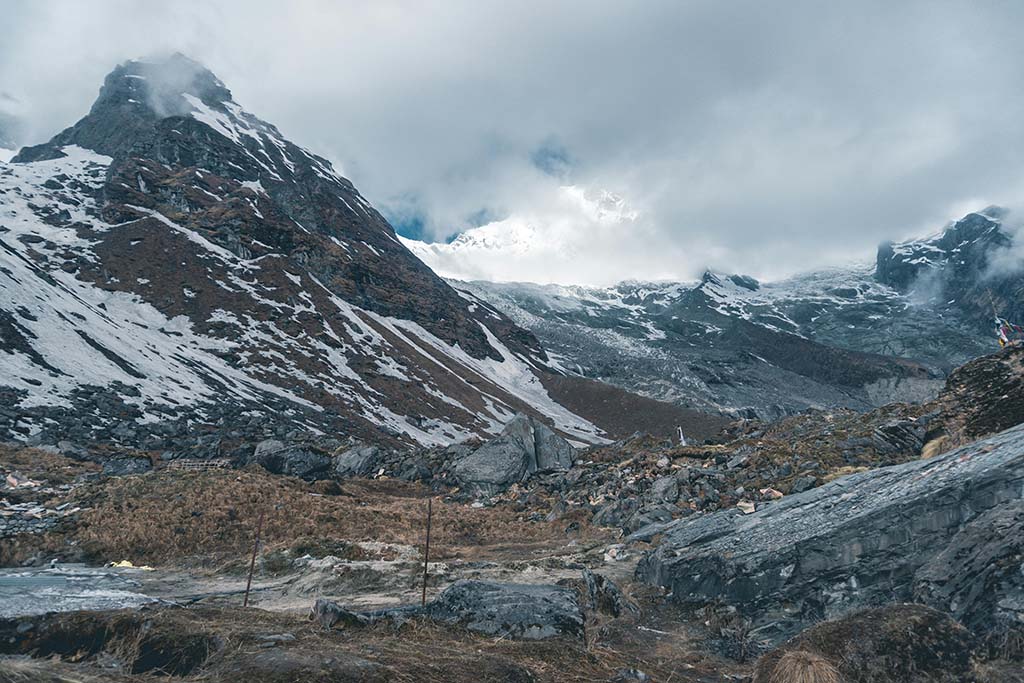
The trail drops toward Chhomrong Khola. After that, we climb into dense woods of rhododendron and bamboo. Once inside the Modi Khola valley, everything shifts, more open, more rugged. On the skyline, mountain summits grow steeper, closer. Near the edge of this wilder terrain, Himalaya settlement provides quiet rest.
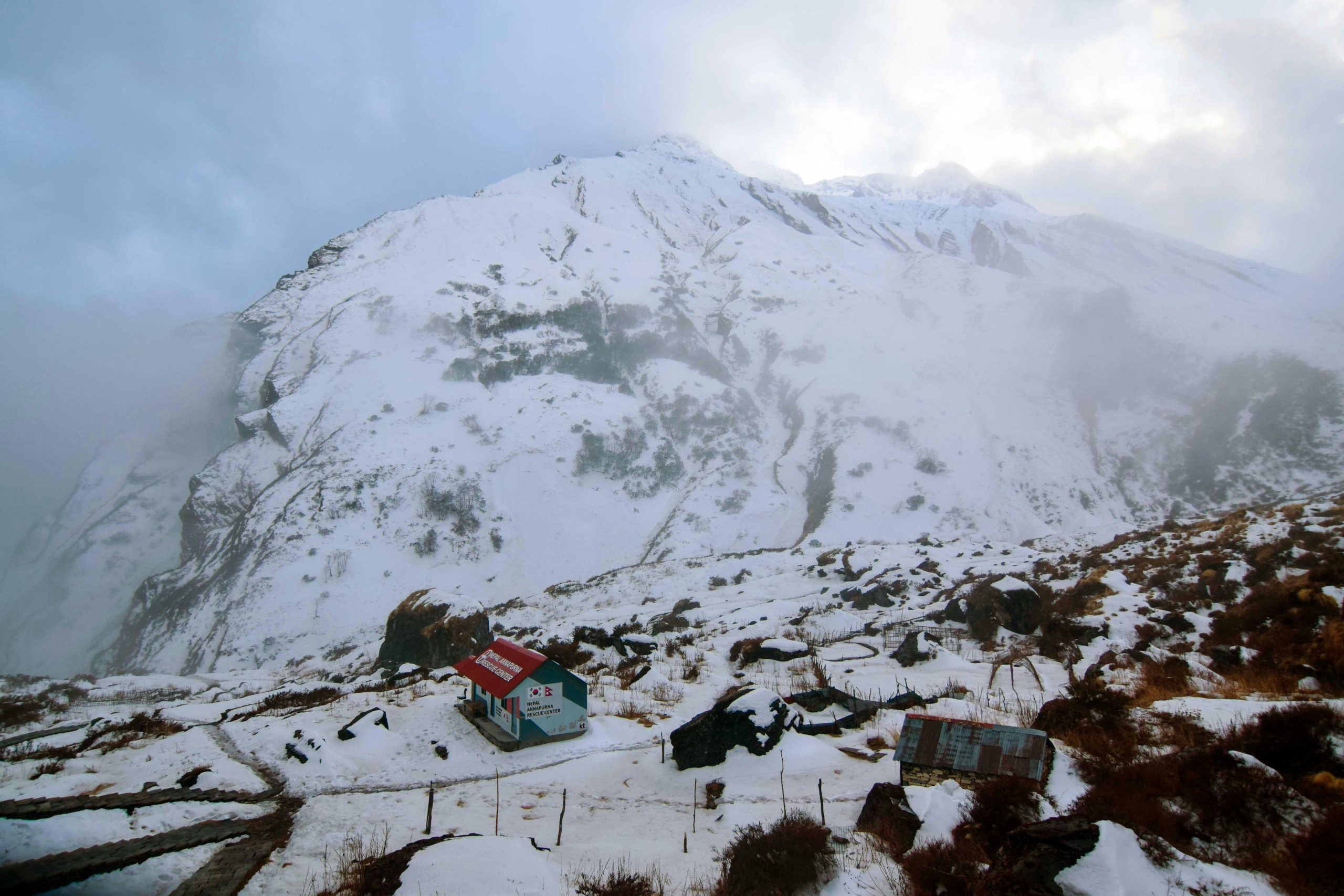
The journey’s highlight starts early in the morning. As sunlight appears, we move over rough moraine terrain. Entering the Annapurna Sanctuary changes your perspective. Around you rise massive mountains Annapurna I, III, IV, South, plus Machhapuchhre. What meets your eyes forms an impressive natural amphitheater. Reaching Base Camp feels rewarding. The raw scenery here stands out. Despite the high elevation, the experience is unmatched. The peacefulness adds value. Though the challenging climb ends here, the views remain memorable.
We begin descending after sunrise. As we drop lower, the landscape keeps changing. Following the Modi Khola river gives us fresh views of surrounding peaks. By the time we reach Bamboo, warmer air returns. This shift feels welcome after the cold at camp.
The path descends through woods toward Chhomrong. After that, we continue descending toward Jhinu Danda. Along the Modi Khola river, natural hot springs await. The warm water helps soothe muscles effectively. A calm riverside environment makes it pleasant.
A final morning walk completes the trek. Once we reach the road, our vehicle awaits. The drive to Pokhara is smooth. Take this chance to reflect on your mountain achievement. Settle into your hotel for proper rest.
Start the day with a meal in Pokhara. Following this, return to Kathmandu, choosing between driving or flying. The trip allows space to think quietly. Once you reach, head to your accommodation. The rest of the day allows room to adjust. Take breaks, visit local spots, or pick up small gifts instead.
Head to Tribhuvan International Airport in Kathmandu for departure. Our staff provides dependable transit options. You’ll leave with lasting experiences instead of mere keepsakes. Bring along sharp images of peaks as well as a sense of achievement. Wishing smooth journeys ahead.
Reach out to our team. We listen to your vision and personally customize your itinerary to ensure you achieve the precise results you’re hoping for.
Reach Annapurna Base Camp (4,130m). Here you witness singular, panoramic view of the entire Annapurna range, without qualification. This vista is your ultimate destination.
Trek among beautiful rhododendron forests and observe the striking geometry of the essential terraced fields.
Explore traditional villages, gaining deep appreciation for the culture of the Gurung and Magar communities; genuine cultural access, we believe, is a core offering.
The stunning ecological change, seamlessly transitioning from subtropical rainforests to high glacial alpine meadows, will deeply amaze you.
It’s a rewarding challenge, but don’t worry about the altitude. It’s very manageable for most of the trekkers. This trek truly welcomes motivated adventurers of all levels.

Our trained guides offer clear advice plus tailored support during your trip. Thanks to their deep familiarity with Annapurna, you stay safe while enjoying a genuine regional perspective.
Every route fits your strength, past hikes, and what you like best, so the rhythm feels right. That way, you move steadily without rush, truly taking in each part of the journey.
We handle all aspects, including visa procedures and essential paperwork like ACAP or TIMS, alongside arranging local travel options. Supervision at each stage comes from experts; this way, your attention stays on the experience itself.
Maintaining steady availability of nutritious, satisfying food happens via trailside teahouses and lodges. Local ingredients appear regularly, paired with traditional recipes, to shape what’s served daily.
Your trek package includes clear pricing, with no extra costs appearing later. Confidence comes from our full money-back promise, so you feel secure every step of the way.
Benefit from our expert local guidance, flawless logistics, and truly authentic cultural immersion. Begin your adventure assured of safety and quality with Butterfly Treks.
We know your Himalaya trip is a big deal,a personal investment. We earn your trust through proven action, not just words. Expect reliable planning and our absolute focus on your safety and experience.
Your well-being comes first. It is our highest priority. All our guides hold wilderness first aid certification. Our operating protocols meet the highest standards. We are a fully registered, bonded member of TAAN and the Nepal Tourism Board. Accountability is guaranteed.
Connect deeply with this amazing place. Our guides are true locals from the Specified region. They share essential knowledge about the trails and mountain life. You gain insight into the rich Gurung and Magar cultures.
We believe travel should help the destination. We use locally-owned teahouses. Our team always receives fair wages. We follow Leave No Trace principles strictly. This protects the pristine Himalaya environment.
Communication must be clear and reliable. We give you detailed pre-departure info. We are accessible throughout your entire trek. This setup gives you peace of mind from your first inquiry to your return.
Although the Annapurna Base Camp Trek route is clearly planned, certain real-world details can improve it for careful hikers. Physical readiness at a simple level matters most. No previous exposure to high elevations is required; however, walking steadily 5–6 hours daily with a light backpack makes things easier. For downhill sections, using trekking poles helps , many find them useful.
Weather shifts fast around Annapurna. Early hours might feel cool, yet by afternoon it warms up slightly in valleys below. Bring layered clothing , water-resistant outerwear along with insulated underlayers , is key. For defense from intense mountain sunlight, use sunscreen; also pack a hat plus goggles or shades. When staying overnight in guest lodges, temperatures drop, which makes a cozy sleeping bag useful.
Connectivity along the trail is weak. Mobile signals appear now and then , mostly close to settlements; meanwhile, only certain teahouses offer internet access. Many visitors see this as an opportunity to unplug from daily routines while taking in mountain views or engaging directly with regional traditions. Power sources for recharging gadgets can be found occasionally in guesthouses, although their availability isn’t always reliable.
Health and safety come first. Even if the trail isn’t extremely high, altitude sickness may still happen. Staying hydrated, moving slowly, while taking breaks at marked points reduces risk. Team leaders have medical supplies along with oxygen tanks – also knowing how to act fast during urgent situations brings confidence on the trip.
Visitors can choose extra activities during the trip. One option is an early tour of Ghandruk’s Gurung cultural exhibit, while another offers a short hike to adjacent vantage points ideal for capturing dawn images. To unwind, travelers might try Jhinu Danda‘s outdoor thermal pools , perfect for easing muscles post-hike.
The trek promotes mindful travel. By using family-run lodges, employing regional guides and helpers , while sticking to eco-friendly practices – you help support nearby villages while protecting nature. Because of this, Europeans who want real experiences with safety and low environmental impact often find the Annapurna Base Camp Trek route both satisfying and reliable.
If you worry about difficulty or budgeting, just ask us. Contact us today for honest advice and easily reserve your Annapurna Base Camp Trek.